

A body corporate is every owner in a community titles scheme acting as one legal entity. It maintains the common property, insures the buildings, enforces the by-laws and sets an annual budget funded by owner levies.
Who the body corporate is
It is not a company you deal with. It is you and every other owner in the scheme. When a community titles scheme is registered in Queensland, the body corporate comes into existence automatically and every lot owner is a member of it.
Day to day it is run by a committee of owners elected at the annual general meeting, usually with a body corporate manager engaged to handle the administration, the money and the compliance. The manager works for the body corporate; they do not own it and they cannot outvote it.
What your levies pay for
The administrative fund covers the running costs of the year ahead: building insurance, public liability, the manager's fee, grounds and gardens, pool maintenance and certification, common area power and water, pest control and repairs.
The sinking fund saves for the long-term items, on a forecast that looks ahead at least nine years. Repainting, roofing, fencing, driveway resurfacing, pool resurfacing and plant replacement. A properly funded sinking fund is the single clearest sign of a well run scheme, because it means the cost of ageing is being paid for gradually rather than landed on whoever happens to own the lot when the roof fails.
Levies are set at the annual general meeting and are usually payable quarterly. Your share is set by your lot's contribution entitlement, which is recorded in the community management statement.
By-laws, and what they can and cannot do
By-laws are the scheme's rules: parking, pets, noise, rubbish, use of the pool, what you can put on your balcony or in your courtyard, and whether you can run a business or let short-term. They are registered with the community management statement and they bind owners, tenants and visitors.
They cannot be unreasonable, and they cannot prohibit something the legislation protects. Queensland law limits a by-law's reach over, for example, keeping a guide dog. A by-law that is oppressive can be challenged through the Office of the Commissioner for Body Corporate and Community Management.
Enforcement runs through a defined process: a notice to the owner, then a continuing contravention notice, then adjudication. The committee cannot fine you on the spot or lock you out of anything.
Caretaking, and why who does it matters
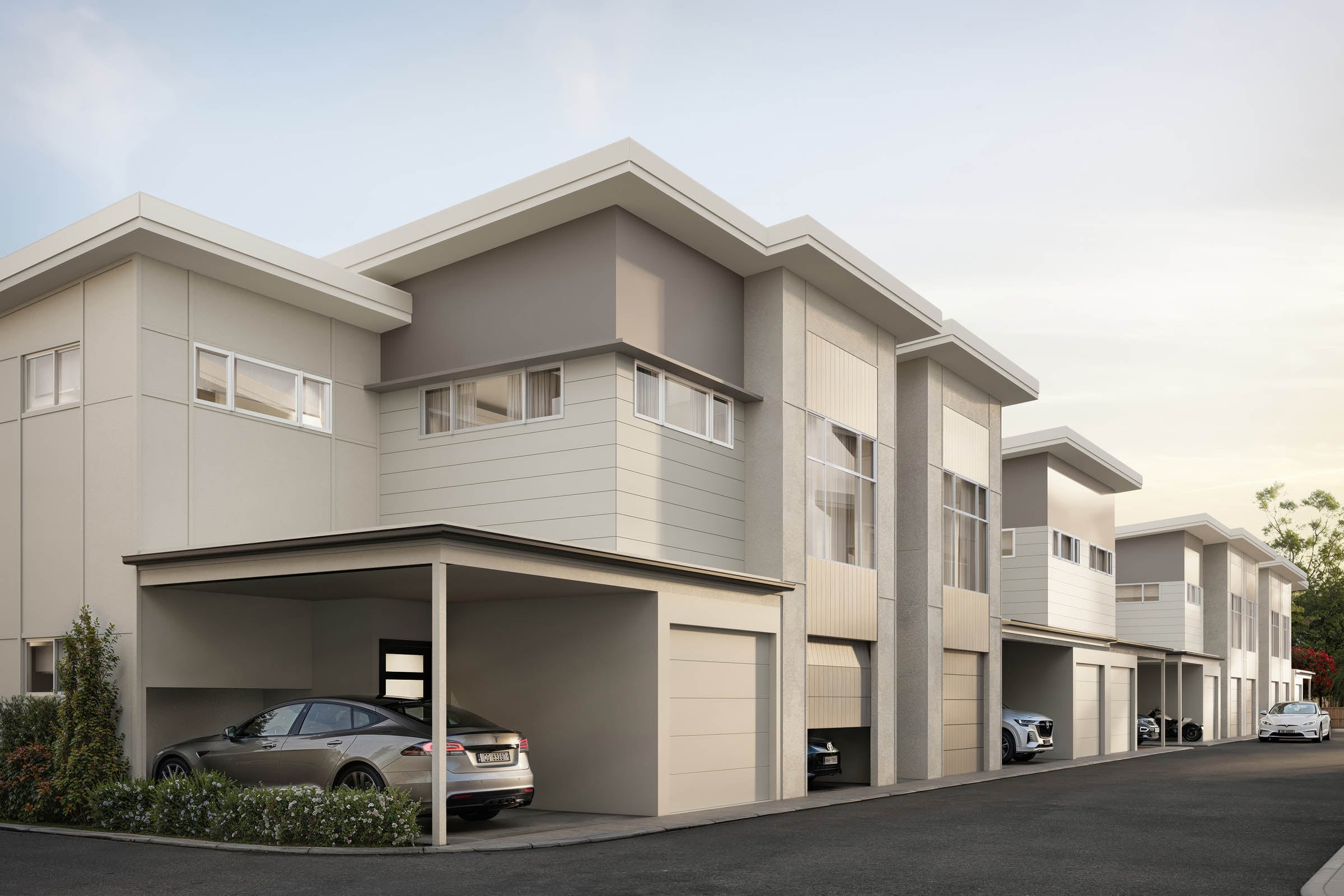
Most townhouse schemes engage a caretaker for the grounds, the pool and the general upkeep of common property, under a service agreement with the body corporate. The quality of that arrangement is what visitors actually see when they drive in.
This is the part buyers under-weight. Two identical communities five years after handover will look nothing alike if one has a caretaker who is paid to show up and another has one who is invested in the place. Ask who holds the caretaking agreement, how long it runs, and what it specifically requires.
The questions to ask before you buy
What are the current levies, and what is the split between administrative and sinking fund?
What does the sinking fund forecast say, and what is the current balance?
Are there any special levies proposed, any defects claims, or any disputes in adjudication?
Who is the caretaker and who is the manager, and what do their agreements require and cost?
What do the by-laws say about pets, parking, letting and home business?
What insurance does the body corporate hold, and when was the last valuation?
Common questions
What does a body corporate do?
It maintains and insures the common property, enforces the by-laws, keeps the scheme's records and rolls, sets and collects levies, and holds an annual general meeting where owners elect a committee and approve the budget.
Can a body corporate stop me having a pet?
A by-law can regulate pets, for example requiring committee approval, but Queensland law requires by-laws to be reasonable and they cannot prohibit an assistance animal. Read the registered by-laws for the specific scheme before you buy, because they differ.
What is a sinking fund?
A fund the body corporate builds up over time to pay for major repairs and replacements, like repainting or a new roof, based on a forecast covering at least nine years. It spreads the cost of ageing across the owners who use the building rather than landing it on one year's owners.
What happens if I do not pay my body corporate levies?
Unpaid levies accrue penalty interest and the body corporate can recover them as a debt. Owners in arrears can also lose the right to vote on ordinary motions. Levies follow the lot, so arrears are dealt with at settlement when a lot is sold.
Who resolves body corporate disputes in Queensland?
The Office of the Commissioner for Body Corporate and Community Management provides information, conciliation and adjudication for disputes in community titles schemes, before any court involvement.
Sources: Body Corporate and Community Management Act 1997 (Qld); Office of the Commissioner for Body Corporate and Community Management. Last updated 13 October 2026. General information only, not legal or financial advice.