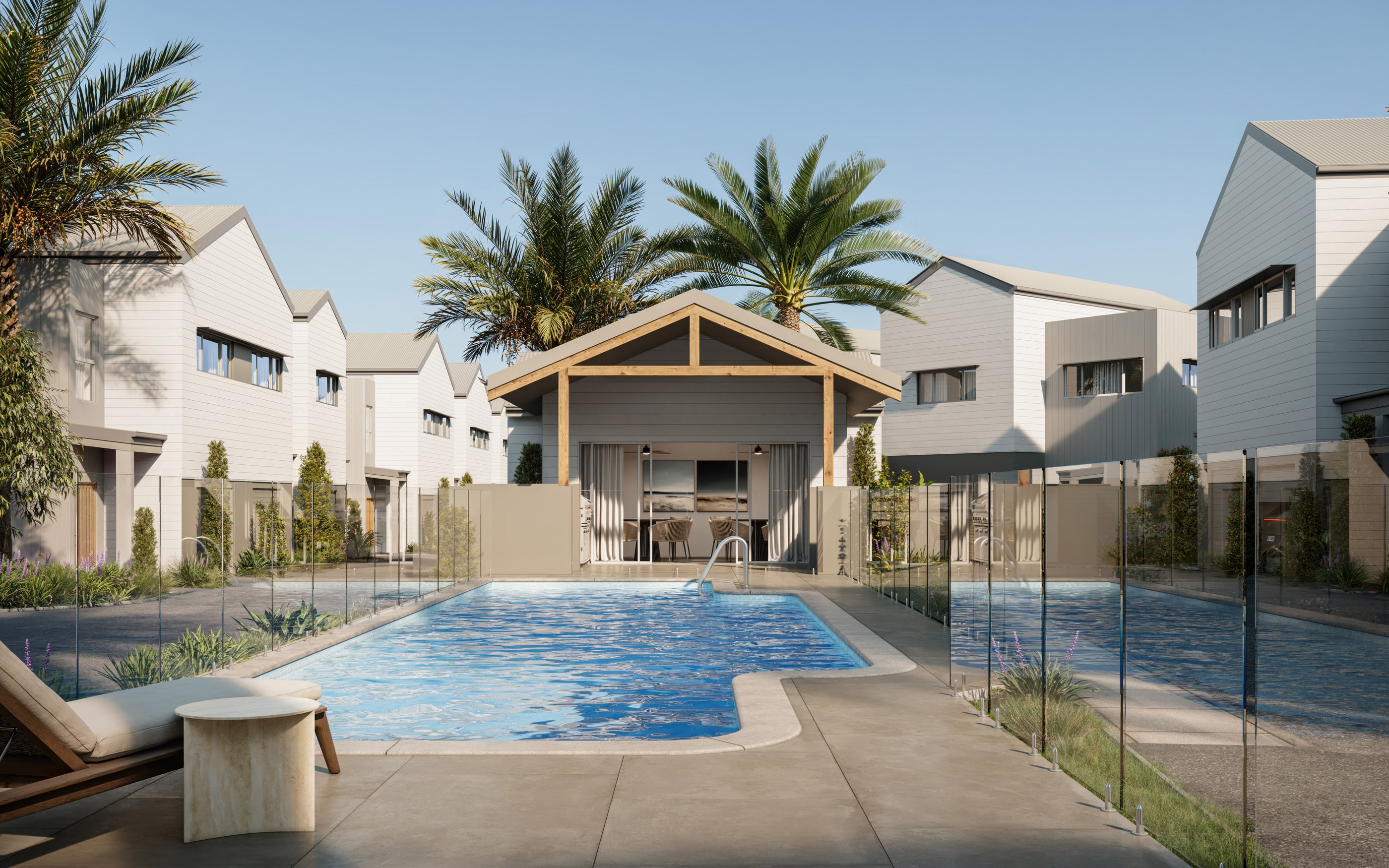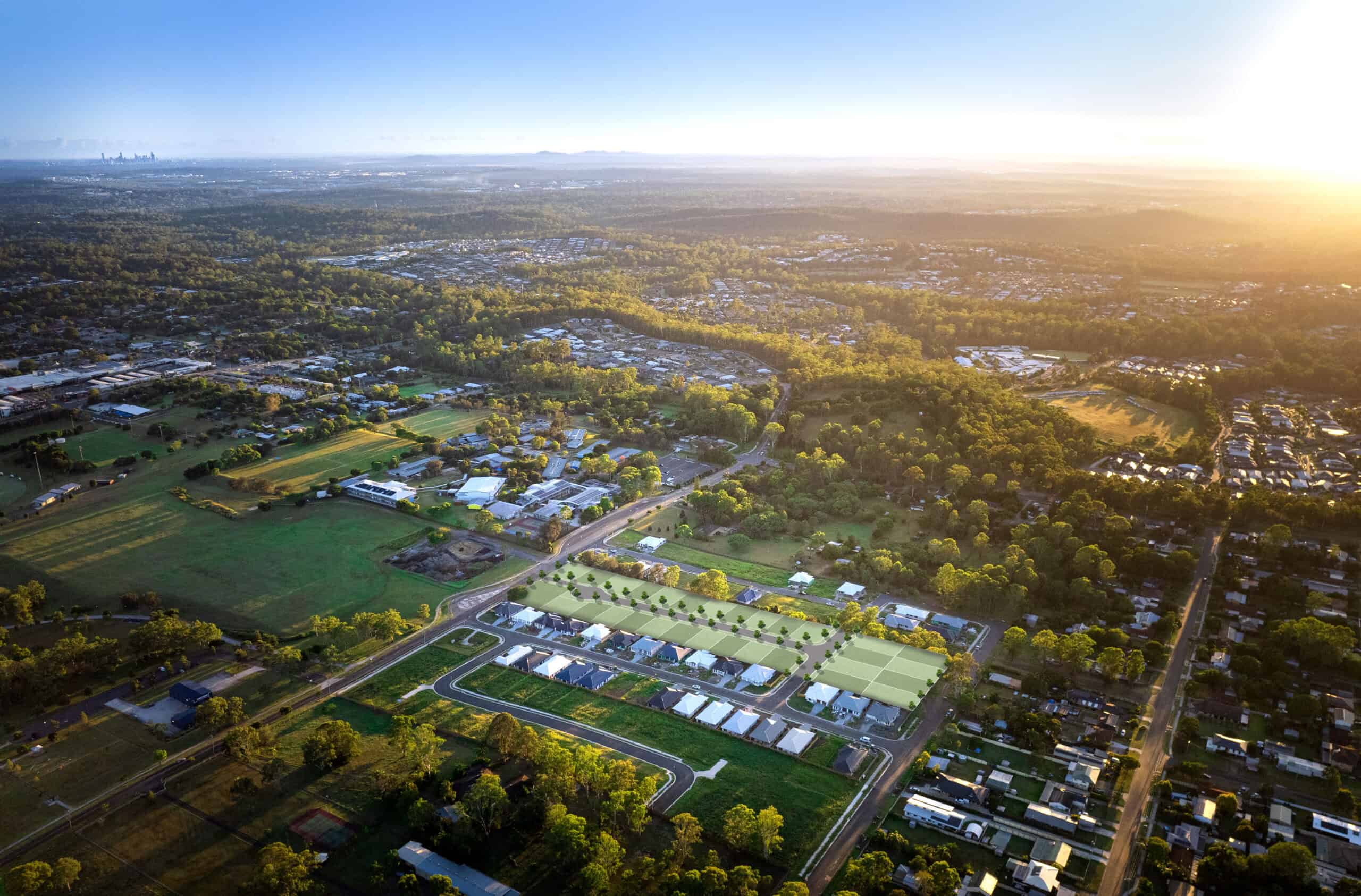

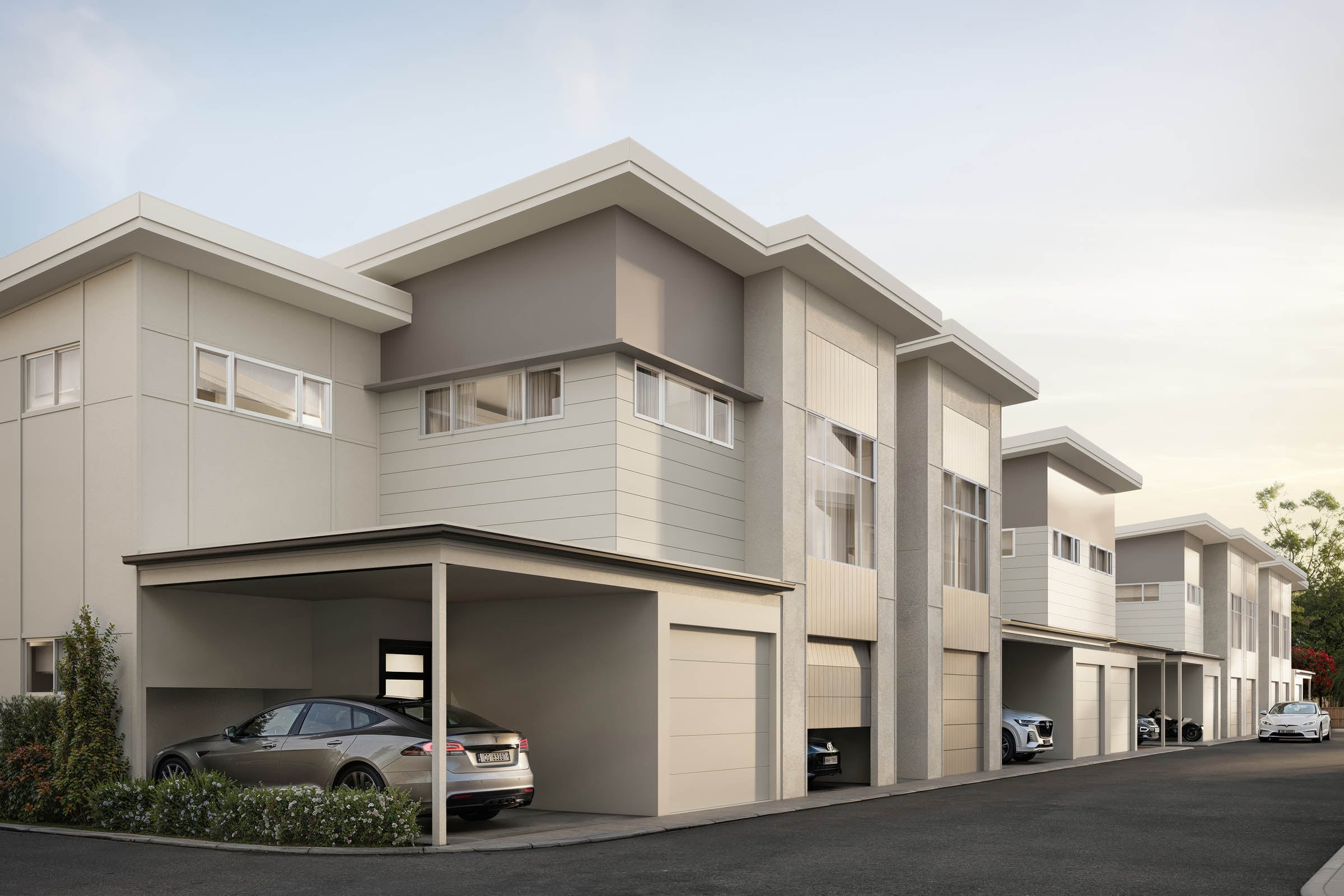
A townhouse in Queensland is a dwelling on its own title inside a community titles scheme. You own your home and your courtyard, and you share ownership of the driveways, grounds and pool with the other owners through a body corporate.
What a townhouse is, in Queensland terms
A townhouse is a dwelling attached to one or more others, usually two storeys, with its own front door, its own private outdoor space and no one living above or below you. In Queensland it is almost always held under a community titles scheme, which means you own your lot and share the common property with every other owner in the scheme.
That is the main difference from a house on a freestanding block. You are not just buying a building, you are joining a scheme with rules, a budget and a committee. Done well that is the attraction: the lawns, the gardens, the driveway and the pool are maintained without you touching them.
How body corporate actually works
The body corporate is every owner in the scheme, acting together. It is governed by the Body Corporate and Community Management Act 1997 and a regulation module that sets how formally it has to operate. It maintains the common property, insures the buildings, keeps the by-laws and sets a budget each year.
You pay body corporate levies, usually quarterly. They cover the administrative fund (insurance, management, grounds, pool, utilities to common areas) and the sinking fund, which saves for the big items, like repainting and replacing roofs, so an owner is never hit with a surprise bill years down the track.
Before you buy, read the disclosure statement and ask for the last two years of minutes, the current budget and the sinking fund forecast. A scheme with a healthy sinking fund and boring minutes is a good sign. A scheme in dispute is not.
Off the plan versus built
Buying off the plan means signing a contract before the home is finished, on the strength of plans, a schedule of finishes and the developer's record. The deposit is held in trust, you pay the balance at settlement after completion, and in Queensland the contract carries a sunset date by which the developer must complete.
The advantages are choice of position within the community, a brand new home under builder's warranty, full depreciation for an investor, and time between signing and settling. The risks sit with the developer: whether they finish, and whether what is built matches what was sold. That is why the schedule of finishes matters more than the render.
Buying built removes that uncertainty. You walk the home, you see the finishes, you settle in weeks rather than months. You usually pay a little more for the certainty, and the pick of the community has already been made by someone else.
What to check before you sign
The schedule of finishes, line by line. It is the contractual description of what you are buying, and it is where a cheap build and a good one separate.
Who maintains the community after handover, and under what arrangement. A developer who hands the keys over and leaves has no stake in how the community looks in five years.
The disclosure statement, the by-laws and the proposed levies. Check whether pets, home businesses and short-stay letting are allowed if any of those matter to you.
The lot entitlement schedule, which decides your share of the levies and your vote. Ask why it is split the way it is.
Your own numbers. Queensland transfer duty, the first home concessions you may be entitled to, legal fees, and for an investor the rental appraisal in writing from an agent who works that suburb.
Costs beyond the price
Transfer duty, calculated on the purchase price, with concessions available for first home buyers and for owner-occupiers. Check the current thresholds with the Queensland Revenue Office, because they change.
Legal and conveyancing, building and pest if the home is built, bank fees and lenders mortgage insurance if your deposit is under twenty per cent.
Body corporate levies, council rates and water, plus insurance for your contents (the body corporate insures the building).
For an investor: letting fees, management fees, and the depreciation deduction that a new build attracts and an older home largely does not.
Common questions
Is a townhouse a good investment in South-East Queensland?
It depends on the suburb and the scheme, not on the word townhouse. The things that hold value are an address with infrastructure already built, a scheme that is well maintained and funded, and a floor plan families actually want. A three bedroom townhome with two and a half bathrooms and a garage in a growth corridor is a deeper rental and resale market than a two bedroom unit.
Do you own the land with a townhouse in Queensland?
Yes, in most schemes you own your lot, which includes your home and your private courtyard, on its own title. The driveways, grounds and shared facilities are common property owned collectively by all the owners through the body corporate.
How much are body corporate fees on a Queensland townhouse?
They vary with what the scheme has to maintain. A townhouse community with a pool and extensive gardens costs more than one with a driveway and a lawn. Ask for the current budget and the sinking fund forecast rather than relying on an average, and check what the levy actually covers before comparing two schemes.
Can I buy a townhouse off the plan with a 10% deposit?
Commonly yes. Off the plan contracts in Queensland typically take a deposit held in trust, with the balance payable at settlement after the home is complete. The exact deposit and terms are set by the contract, so have your solicitor read it before you sign.
What is a sunset date?
The date in an off the plan contract by which the developer must complete the home and settle. If that date passes without completion, the contract usually allows either party to terminate and the deposit to be returned. Check the date and who can rely on it.
Sources: Body Corporate and Community Management Act 1997 (Qld); Queensland Revenue Office, transfer duty and home concessions. Last updated 13 October 2026. General information only, not legal or financial advice.